
Custom Rwanda Maize Flour Production Line Boost Your Profit
The maize flour processing industry in Rwanda is transitioning from household cottage workshops to large-scale industrial factories. According to industry research data, the annual growth rate in demand for complete maize processing production lines exceeds 18%. From the perspective of local purchasers, this article analyzes prevailing market bottlenecks, elaborates the standardized technological workflow of processing of maize, and explains the equipment selection principles and investment comparisons for modular production lines with a daily output ranging from 5 tons to 50 tons.

Market Pain Points and Demands of Rwanda Maize Flour Processing Projects
Ugali serves as the staple food for Rwandan citizens, pushing the consumption penetration rate of maize flour above 95%. Such robust market demand sharply conflicts with the supply system still dominated by rural family workshops, and the gap mainly stems from four prominent industrial challenges:
-
Outdated production techniques lead to fixed low profit margins: More than 90% of rural workshops only adopt single-pass grinding without grain cleaning, drying and degermination procedures. The finished flour contains 3 to 6 times excessive impurities with uneven particle sizes, and its selling price is merely 60% of industrially manufactured flour.
-
Severe grain losses in rainy seasons erode overall profits: Rwanda has an average annual humidity between 70% and 85%. Small workshops lacking drying and grain storage equipment face a mold rate over 45% within 30 days, and post-production losses reach 22%. Raw material costs are consumed heavily even before the first bag of flour is sold.
-
Low production capacity cannot fulfill bulk orders: Workshops with daily processing capacity below 1 ton can only satisfy scattered household consumption, missing out on government school meal bidding projects, chain supermarket procurement and cross-border export orders entirely.
-
Generic machinery fails to adapt to local conditions and causes costly downtime: Conventional industrial equipment not optimized for African operational environments easily suffers rust from damp air and sudden shutdowns triggered by voltage fluctuations, resulting in over 20 equipment failures per year on average.
Industry surveys reveal that after upgrading to standardized complete flour processing lines, the overall profit margin of maize flour milling plants can be boosted by 40% to 70%. This is the primary reason why local Rwandan agricultural cooperatives and investors choose flour production equipment supplied by ABC Machinery. Feel free to click the button below to get connected with exclusive machinery procurement consultants from ABC Machinery; you will receive tailored machine configurations and detailed parameters for the whole assembly line based on your actual production conditions.
Standardized Technological Workflow of Maize Mill Plants
Tailored to Rwanda’s food production standards and local operational conditions, ABC Machinery designs a six-stage fully enclosed graded separation standardized processing workflow, thoroughly replacing the traditional rough single grinding mode. This system confines total processing losses within 5%, effectively inhibits the reproduction of aflatoxin, extends the shelf life of finished maize flour, and fully caters to domestic household use, commercial sales and cross-border export markets.
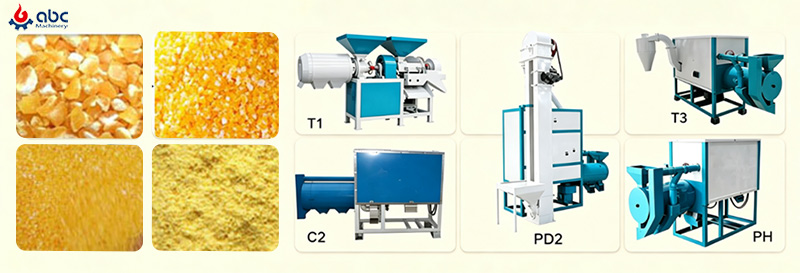
Choose Best Flour Milling Machine for Your Business
Raw Maize Grain Purification: 99% Impurity Removal Rate
-
Triple composite purification including vibration screening, gravity sorting and air dust removal is applied to gradually remove straws, soil clods, stones, shrunken kernels and dust based on physical differences of raw grains. The impurity removal efficiency of the whole production equipment surpasses 99%.
-
This procedure ensures flour hygiene compliance from the source, protects downstream milling machine for maize, and cuts down the malfunction frequency of grain processing machinery.
Constant-Temperature Drying: Fixed Moisture Content at 13%–14.5%
-
Low-temperature gentle drying at 40–50°C combined with intelligent wind speed constant-temperature conditioning is adopted to conduct gradient dehumidification on high-moisture maize in Rwanda, accurately reducing the raw grain moisture content from 18%–22% to the safe processing range of 13%–14.5%.
-
Low-temperature conditioning preserves the complete kernel structure, suppresses aflatoxin growth and grain mildew, and triples grain storage duration, perfectly solving the severe 22% post-production loss issue troubling local small workshops. ABC Machinery can provide customized constant temperature and humidity control solutions suitable for Rwanda’s humid climate.
Degermination and Kernel Breaking: 15% Higher Whiteness, 90-Day Shelf Life
-
Integrated degerminating and cracking machinery physically separates maize germ, bran and endosperm, enabling independent flour milling from pure starchy endosperm. It eliminates the poor flour quality and short shelf life caused by traditional mixed grinding techniques.
-
Oxidation-prone oil-rich maize germs are fully separated, lifting flour whiteness by 15% and extending the normal-temperature shelf life from 30 days to 90 days. Adapted to Rwanda’s lack of constant-temperature warehousing conditions, the finished flour gains greatly enhanced commercial value.
Multi-Stage Progressive Fine Milling
-
A closed-loop workflow combining repeated gradual grinding and circulating graded sifting is adopted. Multiple gentle grinding processes and staged flour extraction isolate crude fiber and refine starchy endosperm, enabling adjustable and controllable flour particle sizes.
-
The production system can manufacture fine maize flour for household ugali consumption and high-standard commercial flour simultaneously, accommodating retail sales, bulk bidding procurement and cross-border export scenarios with far more flexible production capacity than ordinary maize mill machine. ABC Machinery’s customized flour production equipment is calibrated in accordance with Rwanda’s local flour quality standards before delivery, and on-site fine-tuning is available to match shifting market requirements.
5. Finished Product Sifting: Batch Error ≤ 2%
-
High-precision rotary flat screens classify and sort ground powder, intercepting coarse particles and bran agglomerates to unify the particle size, color and purity of flour across each production batch.
-
Batch errors of the whole flour mill production line are strictly controlled below 2%. Homogeneous and stable finished products can directly meet tendering specifications and downstream formula standards without secondary reprocessing.
6. Automatic Packing: 8–12 Bags Per Minute
-
The integrated workflow combines negative-pressure sealed dust removal and fully automatic quantitative packaging, delivering dust-free enclosed whole-process production with automatic weighing, bag filling, sealing and coding functions.
-
Workshop dust emission levels comply with environmental regulations for flour mill plants. The system supports multiple packaging specifications of 1kg, 2kg, 5kg and 50kg, with a packing speed of 8 to 12 bags per minute. Sealed finished maize flour withstands long-distance transportation, covering domestic Rwanda markets and neighboring cross-border regions. ABC Machinery can design exclusive full-automatic packaging systems tailored for bulk delivery scenarios across East Africa.
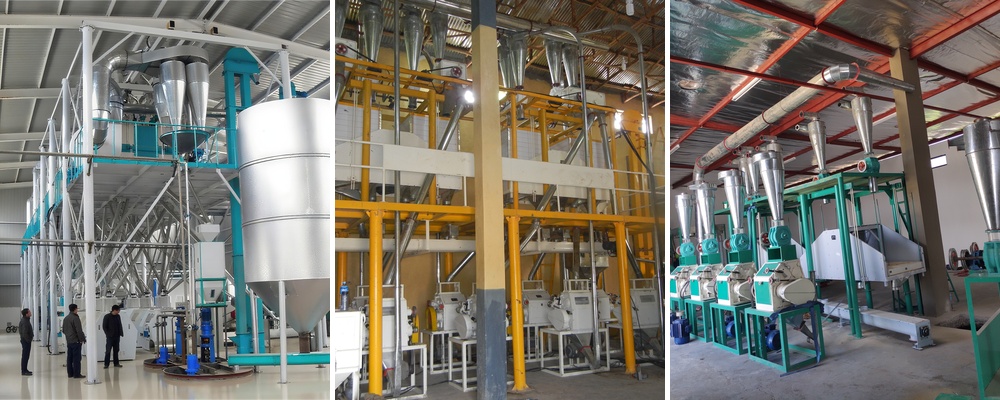
Factory Price Flour Milling Production Plant
Customized Maize Flour Processing Solutions from ABC Machinery for Rwanda
Designed for small-scale flour mill investors, agricultural cooperatives and grain processing enterprises in Rwanda, local upgraded rwanda maize mill systems are equipped with specialized maize processing machinery capable of coping with high humidity, unstable voltage and dusty working environments — advantages that generic industrial equipment cannot deliver. Detailed core specifications are listed below:
| Item | Specification |
|---|---|
| Daily Production Capacity | 5–50 tons (modular customized design) |
| Grain Cleaning Procedures | Vibrating screen + gravity destoner + air dust removal, impurity removal rate ≥ 99% |
| Drying Technology | 40–50°C low-temperature gentle drying with intelligent wind speed adjustment |
| Moisture Content Before Milling | 13%–14.5% |
| Milling Mode | Multi-pass grinding + graded sifting, adjustable flour fineness |
| Packaging Sizes | 1kg / 2kg / 5kg / 50kg, 8–12 bags per minute |
| Adaptable Voltage Range | 180V–240V |
| Operator Training Period | Local workers can operate proficiently within 1–3 days |
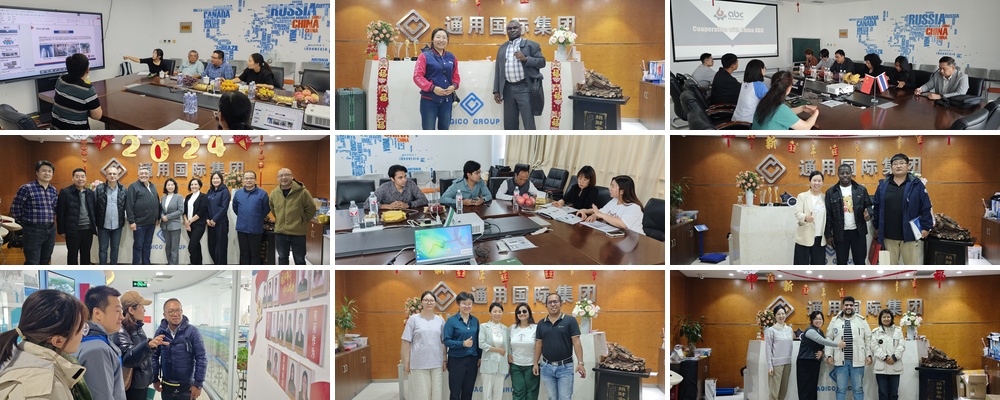
Global Flour Milling Machine Investors Visiting ABC Machinery
Rwanda’s maize flour processing industry is now experiencing a prime transformation period. Phasing out extensive small-scale cottage workshops and launching modern standardized maize processing plant production lines is the key to capturing the local grain and oil market and securing sustainable profits. With professional machinery technology, localized customized schemes and comprehensive after-sales service systems, ABC Machinery has earned the trust of countless entrepreneurs, agricultural cooperatives and grain processing enterprises throughout Rwanda. Do you want to acquire accurate maize flour milling machine price, factory layout planning proposals and project profit analysis for your local maize flour production project? Contact ABC Machinery right now to receive a free one-on-one customized solution!
- Single Flour Milling Machine
- Small Scale Flour Mill
- Large Scale Flour Mill
- Storage Silos
- Pneumatic Grain Conveyor
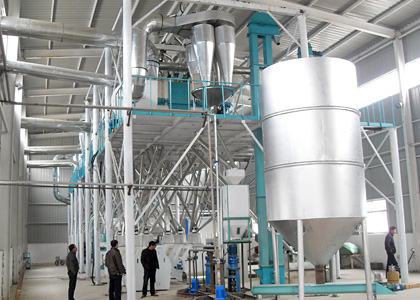


- Small Maize / Corn Flour Mill Machinery Design and Layout
- How to Choose a Reliable Small Wheat Grinding Machine Sale?
- How to Set Up Your Own Mini Wheat Flour Milling Plants at Home?
- Soy Protein Isolation Production Line Cost
- Cost of Setting Up A Soybean Isolate Protein Plant
- Characteristics And Application of Soy Protein Isolate
- How to Maintain Your Own Home Flour Mill Equipment
- How to Make Maize Flour at Home